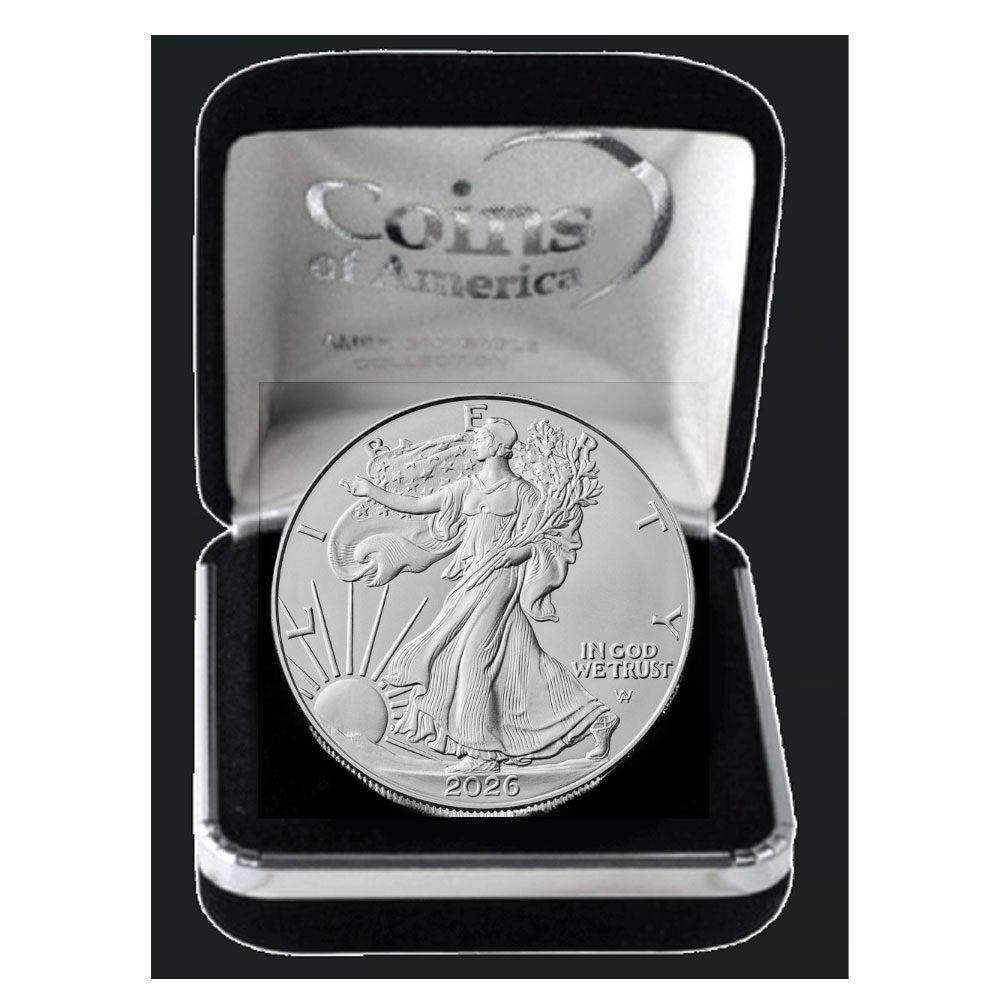
Quick Answer: How Much Does an American Silver Eagle Coin Cost?
The price of Silver Eagles varies primarily due to market demand, dealer premiums, and production limitations. A standard Brilliant Uncirculated silver eagle typically retails for around $75 to $85 each as of mid-2026, which places it at a significant premium over the spot silver price. Generic silver rounds, by contrast, usually sell for just $2–$4 over spot. That gap exists because American silver eagle coins carry U.S. government backing, stronger liquidity, and broader recognition.
American silver eagle coins are typically priced with a significant premium over the spot silver price. Premiums on Silver Eagles can reach approximately $16 per ounce over spot during periods of tight supply or strong demand. Here’s a simplified example using a $75 spot price:
|
Format |
Per-Coin Premium |
Approx. Cost per Coin |
Total Cost |
|---|---|---|---|
|
Single BU coin |
~$7–$10 |
~$82–$85 |
$82–$85 |
|
Tube (20 coins) |
~$5–$7 |
~$80–$82 |
~$1,600–$1,640 |
|
Monster box (500 coins) |
~$4–$5 |
~$79–$80 |
~$39,500–$40,000 |
Proof coin versions and burnished collector editions carry much steeper premiums. The 2026 Semi quincentennial Proof, for example, retails at $173 directly from the U.S. Mint, reflecting low mintage caps and special design elements.
Keep in mind that prices update daily. Coins of America lists current pricing on each product page so you’re always working with the latest numbers rather than outdated estimates.
What Drives Silver Eagle Cost? (Spot Price vs. Premium)
Every silver eagle coin’s price starts with two components: the spot price of silver and the dealer premium stacked on top. Understanding each one helps you evaluate whether you’re getting a fair deal.

- Silver spot price. The base price of silver is determined by global commodity markets and fluctuates daily. The spot price of silver serves as the foundation of the price of silver products. Each american silver eagle contains exactly one troy ounce of .999 fine silver, so spot sets the floor.
- U.S. Mint fabrication costs. The united states mint charges authorized purchasers approximately $3.05 per coin in premiums to cover planchet sourcing, striking, quality control, and packaging. This is baked into the wholesale cost before retailers add their own margin.
- Dealer margins and logistics. Shipping, insurance, payment processing, and retailer profit make up the remaining spread between wholesale and retail. Buying and selling price differences are known as dealer spreads and can vary significantly from one retailer to the next.
- Supply and demand swings. Silver Eagles often carry high premiums due to strong demand and manufacturing costs. During the 2008–2010 recession and the 2020–2021 COVID period, demand for tangible assets like Silver Eagles increased sharply, and premiums on Silver Eagles can remain high due to production constraints when the Mint cannot keep up.
- Coin type, year, and condition. Whether you’re looking at a bullion version, a proof coin, or burnished coins matters enormously. Special mintage years, mint marks, and professional grades all add layers of premium beyond the metal value.
- Bulk purchasing. Buying in bulk usually results in a lower price-per-coin rate. A tube of 20 trims a dollar or two per coin compared to singles, and a monster box of 500 drops it further. Per-coin handling and packaging costs are spread across more units.
Types of American Silver Eagles and Typical Price Ranges
American Silver Eagles come in three versions: uncirculated, proof, and burnished. Each targets a different buyer and sits at a different price point.
- Bullion (Brilliant Uncirculated). The uncirculated version is the standard bullion coin, designed primarily for investors who want exposure to silver bullion at the lowest possible premium. These silver eagle bullion coins typically cost $5–$10 over spot and are produced in the tens of millions annually. American Silver Eagles contain 1 oz of .999 pure silver, making them the go-to choice for stackers.
- Proof coins. Proof Silver Eagles feature a mirror-like finish and frosted details, struck multiple times on specially prepared planchets. They come in presentation cases with certificates of authenticity. Premiums can run 50–130% above the bullion version depending on the mintage year and any special design features. These collectible versions appeal to numismatists and gift buyers.
- Burnished (uncirculated collector edition). Burnished Silver Eagles are struck on polished blanks for a satin finish and typically carry a mint mark from the west point mint. Mintages are far smaller than bullion runs-the 2025-W burnished coin, for example, saw only about 101,991 pieces struck. Pricing falls between standard bullion and proof versions.
- Special issues. Certain coins attract heavy numismatic premiums because of rarity and historical significance. The 1995-W Proof (approximately 30,125 minted), the 2021 Type I/Type II transition pieces, and the 2006–2010 burnished series with production gaps all trade well above typical silver eagle cost levels.
Coins of America clearly labels each listing as bullion, proof, or special issue so you can match your budget and collecting goals without guesswork.

Legislative History, Legal Tender Status & Why It Matters for Value
Understanding the legislative history behind the American silver eagle program helps explain why these coins carry the trust and liquidity they do today.
- The Liberty Coin Act. The liberty coin act was passed on July 9, 1985, as Public Law 99-61. Senator McClure introduced the Liberty Coin Act amendment in 1985, authorizing the Treasury to mint silver bullion coins using silver from the Defense National Stockpile. This legislation created the official silver bullion coin of the United States.
- First strike and release. The first American Silver Eagle coin was struck on October 29, 1986, and American Silver Eagles were first minted in 1986, entering circulation as the country’s premier silver bullion coin. Each coin carries a face value of one dollar, making it legal tender guaranteed by the U.S. government.
- Why legal tender status matters. Although the intrinsic value of each coin far exceeds its one dollar denomination, that legal tender designation provides government backing that generic rounds cannot match. It also means counterfeiting a silver eagle is a federal crime investigated by the Secret Service, adding another layer of buyer protection.
- 2002 program extension. In 2002, legislation allowed purchasing silver on the open market after the Defense National Stockpile was depleted. Without this extension, the American silver eagle program could have ended entirely. Instead, the Treasury gained the flexibility to source silver commercially, ensuring consistent production and stable availability.
These legislative milestones have built a global reputation for the American silver eagle that supports stronger demand and higher liquidity-factors that directly influence long-term cost stability for buyers and sellers alike.
Design Types, Mint Marks & How They Affect Silver Eagle Prices
Design details and mint marks might seem like technicalities, but they’re major drivers of collector premiums.
- Obverse: Walking Liberty. The obverse side features Adolph A. Weinman’s walking liberty design, originally created for the half dollar minted from 1916 to 1947. The image depicts lady liberty draped in an American flag, striding confidently with her left arm extended toward the rising sun. This obverse does not change between Type I and Type II coins-it remains the iconic face of every silver eagle.
- Type I reverse (1986–mid 2021). Type I Silver Eagles feature John Mercanti’s reverse design: a heraldic bald eagle with a shield, clutching oak and laurel branches and arrows, with thirteen stars overhead. This design ran for 35 years.
- Type II reverse (mid 2021–present). Type II Silver Eagles showcase Emily Damstra’s new reverse design, depicting a bald eagle in flight carrying an oak branch, representing strength and resilience. The reverse redesign introduced anti-counterfeit features including a reeded edge notch. Some collectors pay premiums for key transition-year coins from 2021, which exist in both Type I and Type II versions.
- Mint locations. The San Francisco mint produced Silver Eagles from 1986 to 1998, handling early proof production. The Philadelphia mint has struck select bullion and special issues in certain years. The West Point Mint has produced Silver Eagles since 2001 and remains the dominant facility for both bullion and proof coin production.
- Mint marks and pricing. Bullion American silver eagles are typically issued without a mint mark. Collector issues-proof versions and burnished coins-display an “S” (San Francisco), “P” (Philadelphia mint), or “W” (West Point) mint mark. Scarcer mint marks in specific mintage year combinations can significantly raise cost above standard premiums.
Packaging Options: Singles, Tubes & Monster Boxes
How you buy affects what you pay per coin. Here’s what each packaging format looks like.
- Individual coins. Single american coin purchases come in protective packaging such as capsules or coin flips. This format suits gift buyers selecting specific dates, proof coin issues, or collectors filling gaps in a set. Per-coin premiums are highest here because handling costs aren’t spread across multiple units.
- Mint tubes. American Silver Eagles are packaged in protective plastic tubes, each holding 20 coins. These mint tubes are the standard bulk unit for silver eagle bullion coins and are popular with small stackers. Expect to save $1–$2 per coin compared to buying singles.
- Monster box. Monster Boxes contain 500 American Silver Eagles in 25 tubes, with each tube in a Monster Box holding 20 Silver Eagles. The US Mint seals Monster Boxes with a strap seal, and unopened boxes can sometimes command a slight premium on the secondary market because their sealed status verifies authenticity. This format delivers the lowest per-coin cost, making it the preferred choice for high-volume investors.
- Individual Silver Eagles are available in protective packaging as well-whether flips, capsules, or slabs for graded coins-so there’s an option regardless of your purchase size.
Coins of America offers a mix of single coins, sets, rolls, and select bulk options, with clear per-coin pricing so you can see exactly how much you save by stepping up in quantity.

Historical Pricing Patterns & Key High-Demand Periods
Silver eagle cost doesn’t exist in a vacuum. Major economic events have repeatedly reshaped premiums and availability.
- 2008–2010: Financial crisis. Investors flooded into silver coins as a safe-haven asset. The us mint couldn’t keep up with record demand, and production strain led to rationing. Increased demand pushed bullion premiums well above normal levels. Notably, in 2009, proof and burnished Silver Eagles were suspended entirely because silver blanks were diverted to meet bullion demand.
- 2013–2015: Falling spot, rising premiums. Silver spot prices dropped sharply, but collector and investor appetite remained strong. The Mint imposed allocation limits on authorized purchasers, and periodic sell-outs kept premiums elevated even as the underlying metal lost value.
- 2020: COVID-19 disruptions. West Point shut down temporarily, and supply chains seized. A special Philadelphia mint “Emergency Issue” bullion run of approximately 240,000 coins became an instant collector target. Scarcity premiums surged across the board.
- Why it matters for buyers today. Demand for tangible assets like Silver Eagles increases during times of economic uncertainty, and coins from crisis-era years with low mintages often retain elevated premiums permanently. A coin’s date and context can matter as much as its silver content for cost.
When evaluating whether to pay extra for a specific year, consult mintage data and historical price trends to decide if the premium is justified.
Proof, Burnished & Special Issues: Why Premiums Can Be So High
Non-bullion silver eagles can cost far more than a standard uncirculated coin. Here’s why collectors willingly pay up.
- Proof coins. A proof coin involves multiple strikes on polished planchets, producing mirror fields and frosted reliefs. Add coin-specific packaging, a certificate of authenticity, and mintages capped well below bullion runs, and you have a product designed for numismatists and gift buyers. The 2026 Semi quincentennial Proof-limited to 500,000 pieces with dual dates and a star privy mark-launched at $173 from the Mint, roughly 130% above the spot value.
- Burnished uncirculated coins. These uncirculated silver eagles are struck on specially prepared blanks that give the coin a soft satin finish, distinct from the standard bullion coin’s look. Production has been limited to select years starting in 2006, with gaps in 2009–2010 and other periods. The “W” or other mint mark on burnished coins confirms their west point or other mint origin and adds collector appeal.
- High-profile special issues. The 1995-W Proof (about 30,125 struck), anniversary sets, and the 2021 dual-design releases are examples of silver coins where rarity and historic significance overwhelm metal value in determining price. A star privy or special reverse can turn an otherwise standard-looking coin into a four-figure collectible.
- The grading factor. Professional grading can significantly increase the value of Silver Eagles beyond standard pricing. Coins that are independently evaluated for top quality can sell for $100 to $135 or more, and perfect-grade proofs (PF-70) often trade at 20–40% above their raw equivalents.
For these coins, the silver eagle cost is driven more by collector demand and mintage than by bullion value, so prices may not track the silver spot price closely. Coins of America provides detailed product descriptions so buyers understand exactly why a proof or burnished coin is priced far above standard bullion eagles.
American Silver Eagles as Legal Tender, Investments & Gifts
The american silver eagle sits at an unusual intersection: it’s simultaneously legal tender, an investment vehicle, and a meaningful gift.
- Legal tender with real value. Each coin carries a face value of one dollar, yet it typically trades at many times that because of one troy ounce of pure silver plus collector premiums. The government backing behind that face value enhances market trust without limiting the coin’s upside.
- Investment appeal. Silver Eagles command higher premiums than generic rounds due to government backing, and investors accept that tradeoff because of the coin’s global recognition, strong liquidity, and easier resale. They are the most popular silver bullion coins globally, and they are recognized worldwide for authenticity and trust. American Silver Eagles are highly liquid and sought after in both domestic and international markets. They are also IRA-eligible for precious metals investment, making them a practical choice for tax-advantaged silver exposure.
- Gift suitability. Birth-year coins, milestone anniversaries, retirements-silver eagles make memorable, patriotic gifts. Proof versions in presentation packaging or specific-year uncirculated coin selections justify a modest added cost for the recipient’s experience.
Whether you’re selling silver down the road or holding for decades, the American silver eagle’s combination of trust, liquidity, and recognition makes it a cornerstone of any precious metals strategy.
Themed sets and gift packaging options help buyers balance budget, aesthetics, and long-term value.
Performing Security Verification & Avoiding Counterfeits
Buying silver coins online involves two layers of security: making sure the website is legitimate and making sure the coin itself is genuine.
- Online security. Reputable numismatic retailers use a security service to protect checkout and customer accounts from fraud. Tools like CAPTCHA systems block malicious bots, and encrypted payment channels keep financial data safe. If a site’s security verification flags suspicious activity, you may see a prompt confirming verification successful or asking you to complete an additional step. Some systems display a respond ray id or reference number for troubleshooting. This security service verifies that real customers-not automated bots-are completing transactions.
- Physical authentication tips. When performing security verification on a coin itself, start with the basics: each silver eagle should weigh approximately 31.103 grams (one troy ounce), measure 40.6 mm in diameter, and show clean, sharp design details. On Type II coins minted from mid-2021 onward, look for the anti-counterfeit notch in the reeded edge. Examine the obverse for crisp relief on the walking liberty figure and the reverse for accurate detail on the bald eagle design.
- Buy from established dealers. Purchasing from retailers like Coins of America rather than anonymous marketplaces dramatically reduces counterfeit risk. Established dealers source directly from the us mint’s authorized purchaser network and stand behind every sale.
- Third-party grading. For higher-value proof coin purchases, key-date bullion coin finds, or any coin where authenticity is critical, consider submitting to PCGS or NGC for professional authentication and grading.
- Shipping and handling. Secure shipping with insurance and discreet packaging protects your investment from order to delivery, rounding out the full chain of security.

Buying American Silver Eagles from Coins of America
Coins of America is a U.S.-based numismatic retailer specializing in American silver eagle coins, U.S. Mint series like Presidential Dollars and Innovation Dollars, and themed coin collections for collectors and gift buyers.
The site offers bullion, proof, and special American coin selections individually and in sets, with live pricing that reflects the latest silver market. Whether you’re looking for a single uncirculated coin as a birthday gift or building a position in silver bullion, product pages show current cost, mintage details, and coin specifications.
Here’s how to get started:
- Browse key categories. Check “American Silver Eagle Coins,” “New Arrivals,” and “Promotions” for current deals, limited-mintage pieces, and clearance pricing on prior-year coins.
- Compare options. Each listing clearly identifies whether a coin is a bullion version, proof, or special issue-along with its mint mark, mintage year, and finish-so you can match your budget to your goals.
- Get help. Customer support is available by email or phone to help compare silver eagle cost options, whether you’re choosing a single gift coin or evaluating a larger investment purchase. They can also walk you through the difference between an American silver eagle and an American gold eagle if you’re considering both metals.
- Stay informed. Sign up for Coins of America emails or catalogs to get notified about new American silver eagles, price moves, and upcoming 2026 releases-including any remaining Semi quincentennial proof inventory.
Understanding what goes into silver eagles cost puts you in a stronger position every time you buy. Whether you’re a first-time collector or a seasoned investor in this popular silver bullion coin, the right information turns a purchase into a confident decision.